
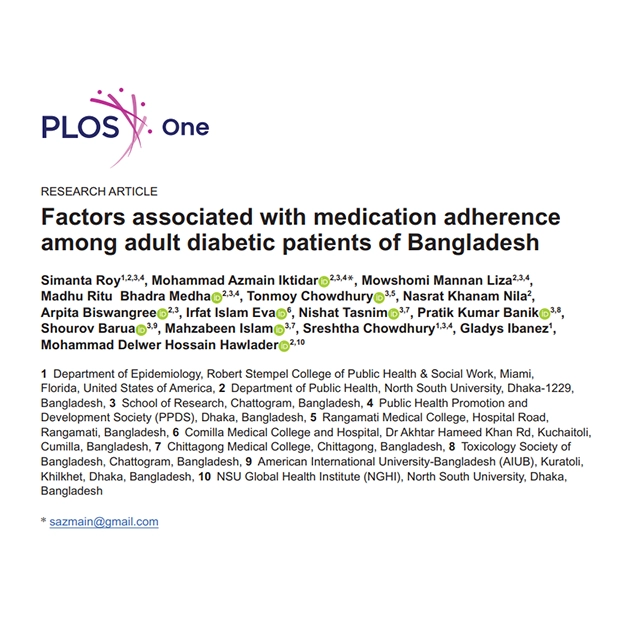
Published at Plos One
Medication non-adherence remains a formidable public health challenge, frequently leading to disease progression, diminished quality of life, and preventable healthcare utilization. While much is known about adherence barriers in high-income nations, comprehensive data from low- and middle-income settings like Bangladesh have remained limited.
To bridge this gap, our team investigated the personal, social, and disease-related factors influencing medication adherence among adult diabetic patients as part of a Supervised Research Training project.
Key Findings at a Glance
- Overall Prevalence: Approximately 42.25% of participants demonstrated poor medication adherence based on the validated MARS-5 scale.
- Social & Educational Support: Patients living with a partner and those with higher educational attainment (such as undergraduate degrees) showed significantly higher odds of maintaining good adherence, underlining the crucial role of social and cognitive capital.
- The Healthcare Interface: Complete comprehension of prescribed medications and general satisfaction with healthcare services heavily promoted adherence. Conversely, dissatisfaction and a high pill burden reduced compliance.
- The Risks of Self-Medication & Mental Health: Unsupervised self-medication practices drastically lowered adherence odds (AOR: 0.35), as did poor self-perceived mental health (AOR: 0.53).
Policy and Clinical Implications
Our findings suggest that improving diabetes management in resource-constrained settings cannot rely on prescriptions alone. Interventions must encompass:
- Enhanced Patient Education & Counseling: Ensuring patients thoroughly understand their dosing regimens and indications.
- Mental Health Integration: Addressing psychological well-being during clinical encounters.
- Regulatory Action: Curbing informal, unregulated over-the-counter dispensing of prescription drugs.
Read the complete study details, methodology, and statistical analysis published in PLOS ONE.